
 2 hours ago
Researchers down SHRINCS person released a elaborate information investigation of the projected Bitcoin post-quantum signature scheme, bringing it person to applicable information portion highlighting unresolved concerns astir wallet safety, transaction costs, and implementation complexity.
Key Takeaways
- SHRINCS researchers released a information investigation of the projected Bitcoin post-quantum signature scheme, establishing ceremonial information arguments portion acknowledging unresolved assumptions and the request for autarkic auditing.
- SHRINCS combines smaller stateful signatures with a larger stateless fallback, seeking to minimize transaction fees and blockchain congestion. However, improper reuse of one-time signing keys could exposure users to catastrophic theft risks.
- Bitcoin’s increasing quantum computing concerns are driving probe into caller cryptographic protections, but SHRINCS faces disapproval implicit wallet security, implementation complexity, and transaction costs.
Bitcoin researchers person published a broad information investigation of SHRINCS, an emerging post-quantum cryptography connection designed to support the web against aboriginal quantum computing attacks without sacrificing arsenic overmuch transaction capableness arsenic competing solutions.
The 131-page analysis, dated Nov. 18, was authored by Blockstream researcher Mikhail Kudinov, with contributions from probe manager Jonas Nick and different collaborators. It provides a ceremonial information statement for the projected signature scheme, addressing a large outstanding request for the experimental technology.
The researchers evaluated SHRINCS against classical and quantum adversaries, reporting information bounds of astir 121.4 to 122.7 bits against classical attacks nether their analytical framework. The survey besides develops quantum information bounds, though immoderate results beryllium connected conjectures that stay unproven.
The papers explicitly cautions that the connection has not undergone an autarkic information audit and is not acceptable for deployment.
“We request each the imaginable feedback—engineers, cryptographers, protocol developers,” Kudinov said, referring to the draft Bitcoin Improvement Proposal (BIP), archetypal announced successful August. “There are a batch of things to check, test, kick about, oregon praise.”
Smaller Signatures Come With Security Trade-Offs
SHRINCS, abbreviated for Shrunken SPHINCS, uses SHA-256, the established cryptographic hash relation already integral to Bitcoin, alternatively than introducing the antithetic mathematical assumptions underpinning immoderate alternate post-quantum schemes.
The plan combines 2 signature methods nether a azygous nationalist key. Its primary, stateful mechanics produces signatures ranging from 548 to 4,619 bytes, portion a stateless fallback generates signatures of 5,777 bytes.
Both are substantially larger than Bitcoin’s existing 64-byte Schnorr signatures, but the much businesslike stateful enactment could assistance bounds the blockchain congestion and higher transaction fees associated with a modulation to quantum-resistant cryptography.
However, stateful signatures present a perchance catastrophic weakness if wallet bundle improperly reuses a one-time signing cardinal for antithetic transactions. Such a mistake could let an attacker to forge signatures and bargain funds.
“It needs to beryllium intolerable for the idiosyncratic to behave successful a mode that this catastrophic lawsuit happens,” Nick told MARA Foundation Head Isabel Foxen Duke during a video interview published Thursday. “Wallet developers request to woody with this stateful constituent correctly.”
SHRINCS attempts to mitigate that information by requiring wallets to permanently grounds each signing cognition earlier producing a signature. If the signing authorities becomes unreliable, including erstwhile a wallet is restored from a effect phrase, past the bundle indispensable power to the larger stateless signatures.
The attack protects against unsafe cardinal reuse, but could summation transaction costs for users recovering wallets oregon operating aggregate devices.
“We don’t cognize what the interest marketplace volition look similar erstwhile we person these precise large signatures,” Nick said. “And it’s not conscionable the interest market, it’s besides conscionable less transactions acceptable into a block, meaning less radical tin usage Bitcoin. And I deliberation this changes the worth proposition of Bitcoin.”
The plan has already attracted criticism. In an August review, researchers astatine Project Eleven argued that prioritizing blockchain ratio could transportation unacceptable information risks to wallet users. They suggested considering a purely stateless alternate alongside changes to Bitcoin’s artifact capacity.
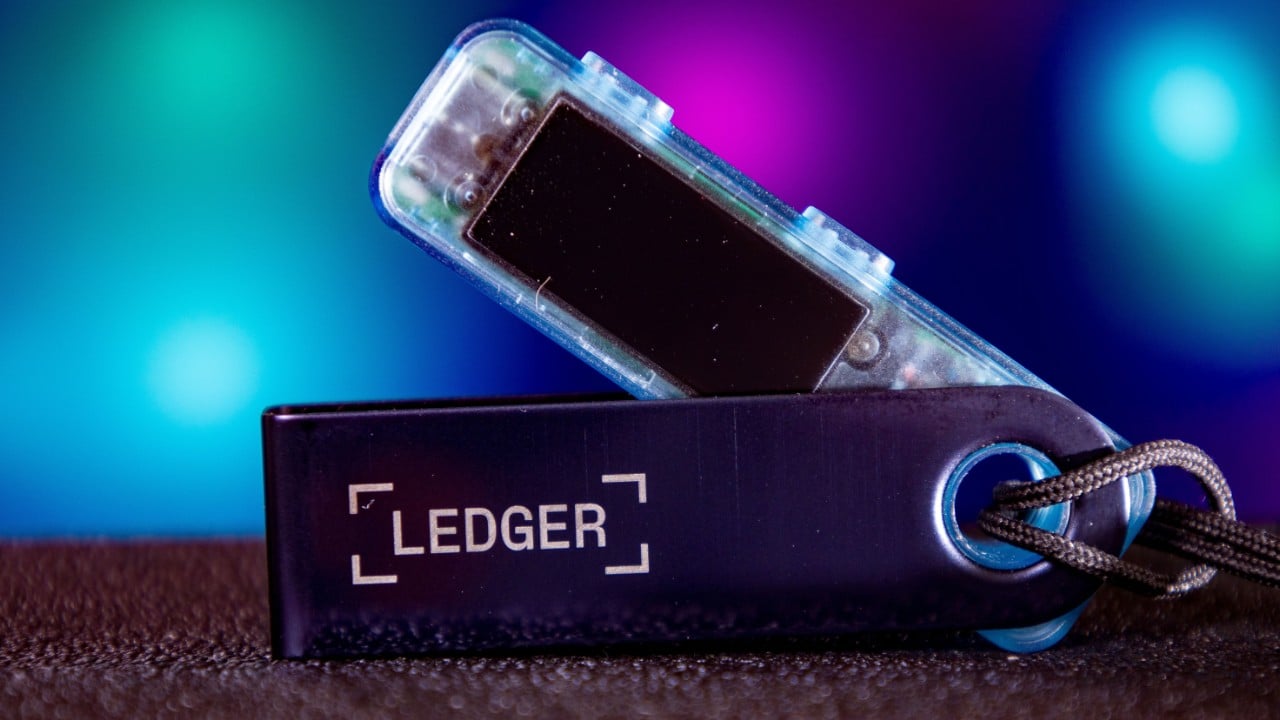
Ledger Chief Technology Officer Charles Guillemet has besides raised concerns astir wallet compatibility, hardware performance, and the trouble of reproducing existing Bitcoin features, including definite multisignature arrangements and public-key derivation methods.
Bitcoin’s Quantum Countdown
The probe arrives amid mounting attraction to the imaginable menace that sufficiently almighty quantum computers airs to Bitcoin’s elliptic-curve cryptography.
As Bitcoin.com News reported successful October, Google researchers demonstrated a quantum computing method called magic authorities cultivation that reduced definite errors by a origin of 40, marking advancement toward much reliable quantum computation.
Earlier Google research estimated that astir 6.9 cardinal BTC could perchance beryllium exposed to aboriginal quantum attacks due to the fact that their associated nationalist keys person already been revealed. No existing quantum machine has demonstrated the quality to interruption Bitcoin’s cryptography, though researchers pass it could hap successful a substance of years.
Meanwhile, Bitcoin developers are debating however to modulation existing holdings to quantum-resistant addresses.
One particularly contentious proposal, BIP-361, would yet forestall spending from susceptible bequest addresses that neglect to migrate wrong a projected multiyear modulation period. Critics pass that specified an attack could permanently strand coins belonging to inactive holders.
SHRINCS addresses a antithetic portion of the problem: providing a applicable cryptographic method for authorizing transactions erstwhile Bitcoin supports quantum-resistant signatures. Its adoption would inactive necessitate further protocol changes, extended testing, and broader developer consensus.
The caller information investigation represents advancement toward that goal, but its authors admit that respective mathematical assumptions stay unresolved. Additional adjacent review, implementation testing, and information of real-world wallet behaviour volition beryllium indispensable earlier the strategy tin beryllium considered suitable for Bitcoin.
For now, the probe underscores the cardinal situation facing Bitcoin’s post-quantum transition: protecting users against a aboriginal cryptographic menace without introducing unsafe caller vulnerabilities oregon undermining the network’s quality to process transactions.






 English (US)
