
 3 hours ago

The post Pi Day Brings Big Changes to Polkadot With First-Ever Halving Event: Here’s Everything You Need To Know appeared first on Coinpedia Fintech News
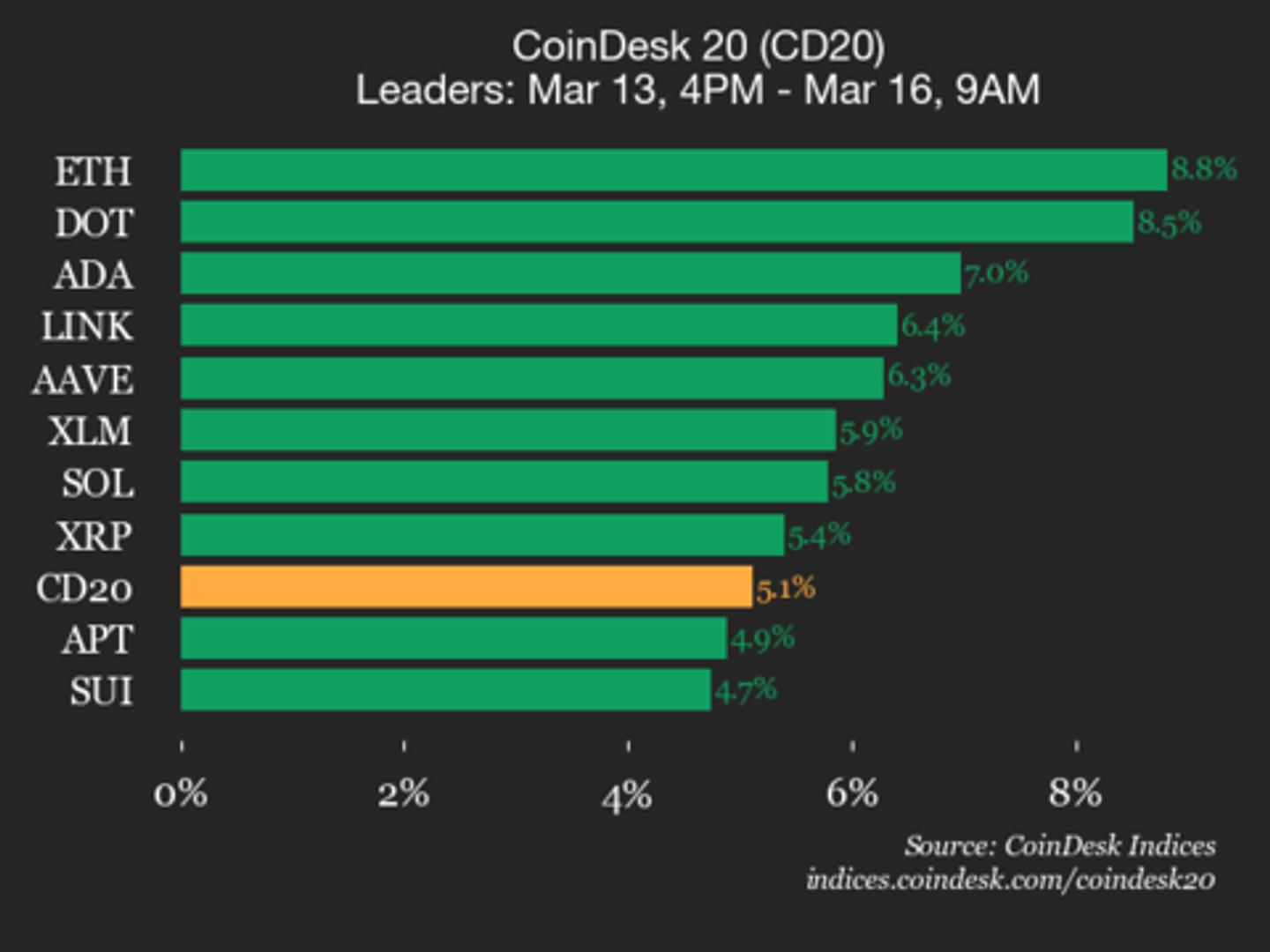
Polkadot is having a moment. The token jumped over 11% in 24 hours as traders came rushing back in, pushing the price toward $1.59 and snapping what had been a pretty quiet stretch for one of crypto’s more established layer-one networks.
But if you dig past the price action, something more interesting is going on underneath. And according to LunarCrush, most of the market has not fully caught on yet.
Polkadot Just Did Something It Has Never Done Before
Polkadot completed its first-ever halving, and the numbers behind it are significant. Annual token emissions were slashed from around 120 million DOT down to roughly 55 million. On top of that, a hard supply cap of 2.1 billion tokens was introduced, giving DOT a scarcity mechanism it never had before.
When the update first went through, the market barely blinked. That is actually not unusual. Structural changes in crypto often take weeks or months before price catches up to fundamentals. But the data is now starting to move.
Social dominance for Polkadot jumped nearly 147% week over week. AltRank climbed from 109 to 6 in a single month. And despite all of this, DOT is still sitting nearly 97% below its all-time high, which means a lot of the repricing story may still be ahead of it rather than behind.
The Trading Activity Backs It Up
This does not look like a random pump. Daily gains hit over 13% recently with trading volume reaching around $415 million. Monthly volume has climbed more than 300%, which shows real participation returning rather than just a short squeeze.
Data from CoinGlass shows that on Binance, approximately 61.66% of top traders are holding long positions against 38.34% short. When experienced traders lean heavily toward one side, it is usually worth paying attention.
Institutions Are Starting to Show Up
The 21Shares Polkadot ETF, trading under the ticker TDOT, recently launched on Nasdaq and pulled in around $544,000 in its first week. That is a modest start but an important one. An ETF listing creates an institutional on-ramp that did not exist before, and institutional money tends to move slowly until it does not.
Community Buzz Says It All
The broader crypto community is starting to notice. Crypto user CryptoShaw called it “the most underreported story in crypto right now,” pointing to the combination of a halving event, emissions cut, ETF launch, and rising engagement metrics.
With supply tightening, activity rising, and institutional access improving, Polkadot may be entering a new phase, one that the market is only beginning to price in.
Never Miss a Beat in the Crypto World!
Stay ahead with breaking news, expert analysis, and real-time updates on the latest trends in Bitcoin, altcoins, DeFi, NFTs, and more.
 Subscribe to News
FAQs
Polkadot’s first halving cut annual DOT emissions from about 120M to 55M and added a 2.1B supply cap, reducing new supply and potentially increasing long-term scarcity.
Institutional interest is emerging, highlighted by the launch of the 21Shares Polkadot ETF (TDOT), which provides regulated market access for investors.
Yes. DOT remains about 97% below its peak, meaning some investors see potential upside if adoption and market sentiment continue improving.
Analysts expect DOT to trade roughly between $1.31 and $1.75 in 2026, though bullish scenarios could push prices closer to $2–$3 if adoption and demand increase.
The halving reduced DOT’s emissions and introduced a supply cap, improving scarcity. Many investors see it as a stronger long-term setup if network adoption continues growing.







 English (US)